
Clove Chewing Gum
Clove Chewing Gum review: a 1914 original that peaked in Prohibition speakeasies, shipped to WWII soldiers, survived seven corporate owners, and still tastes like nothing else on earth.
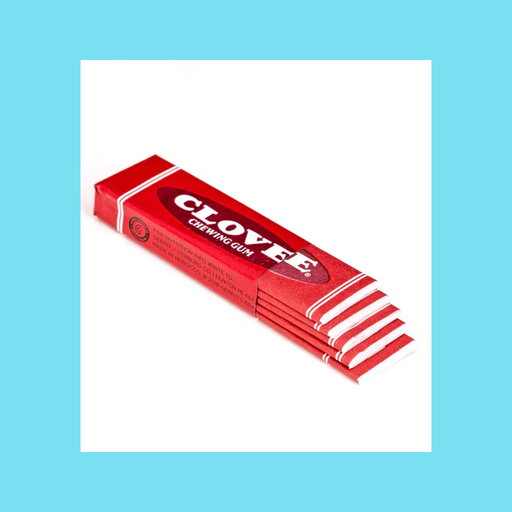
- 😋 Taste 4.5
- ⏱️ Flavor Duration 2.5
- 🫧 Bubble Size * 1.0
- 👅 Texture 4.5
* Bubble-blowing isn't counted in the overall for chewing gums.
Clove Chewing Gum: Background & Overview
Clove Chewing Gum is made by Gerrit J. Verburg Co. and sold through vintagegums.com. It’s a spiced chewing gum: warm, slightly numbing, distinctly clove, with hints of cinnamon and allspice. It has been around since 1914, which makes it one of the oldest surviving gums in America. A few decades younger than its stablemate Black Jack, but old enough to have an entire Prohibition era baked into its identity.
This is a chewing gum, not a bubble gum. Thin sticks, a red wrapper that’s been iconic since before your grandparents were born, and a flavor unlike anything else in the gum aisle. If you’ve never tried it, the taste is genuinely hard to describe without just saying: it tastes like cloves. Warm, slightly medicinal, with a pleasant tingling that some people immediately love and others don’t see coming.
You can find it at specialty candy shops, retro candy retailers, and online at vintagegums.com.
The Clove Gum Story
To tell the Clove Gum story properly, you have to start 30 years before Clove existed. The story begins, as so much of American gum history does, with Thomas Adams and a deposed Mexican general.
The full backstory lives in our Black Jack review, but the short version: Thomas Adams was a photographer and inventor who acquired chicle from Antonio Lopez de Santa Anna in 1869, tried and failed to turn it into rubber, and accidentally built the American chewing gum industry instead. His first flavored gum was Black Jack in 1884, the first flavored gum ever sold in the United States.
By 1914, Adams had been at this for 30 years. His company, Adams Sons & Co., had tried several flavors after Black Jack, including Tutti-Frutti and Sour Orange. None of them stuck the way Clove did. Where Black Jack went dark and licorice, Clove went warm and spiced. Different personality, different audience, same DNA.
The Speakeasy Gum
Here is where the Clove Gum story gets genuinely great.
Prohibition started on January 17, 1920. The 18th Amendment made alcohol illegal across the United States. What actually happened: 32,000 speakeasies opened in New York City alone. People kept drinking. They just had to do it quietly, in back rooms, behind passwords, hoping a cop didn’t walk in.
When you stumbled out of a speakeasy at midnight smelling like bourbon, you needed something fast. And Clove Gum’s advertising was already waiting. The tagline: “Take your breath away.”
That double meaning was not accidental. Clove’s strong, spiced flavor was legitimately effective at masking alcohol breath. It became a companion to speakeasy culture: the thing you popped in your mouth before stepping back onto the sidewalk and trying to look like a law-abiding citizen. A real chunk of Clove’s 1920s popularity was driven by people who needed actual cover, not just fresh breath.
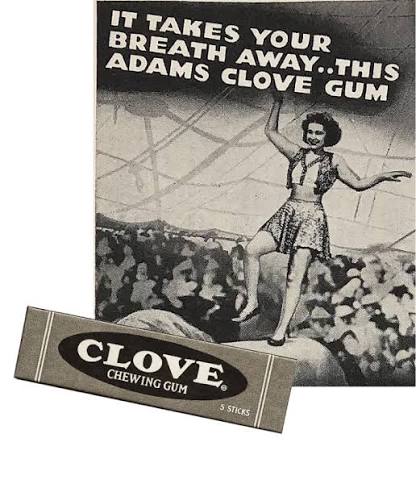
This is, quietly, one of the great origin stories in gum history. While other brands were pitching sweetness and freshness, Clove was the gum for people who needed results. Al Capone didn’t leave a record on whether he chewed it. But the math works out.
The Red Wrapper
One small but permanent piece of gum history: Clove was the first spice-flavored gum ever sold in red packaging. That connection between “red wrapper” and “spice gum” became an industry standard. Every cinnamon and spice gum you’ve ever seen in a red pack owes something to a decision made over 100 years ago.
The original packaging had orange accents around the red. That’s the version that shipped in WWII soldier field kits in the 1940s, when the U.S. Army packed Clove Gum with troops at the front. Over the following decades, the orange accents gradually gave way to deeper red tones, until the wrapper became the solid red icon it is today.
Pretty cool to know that this gum that you can enjoy today was also chewed by WWII soldiers!
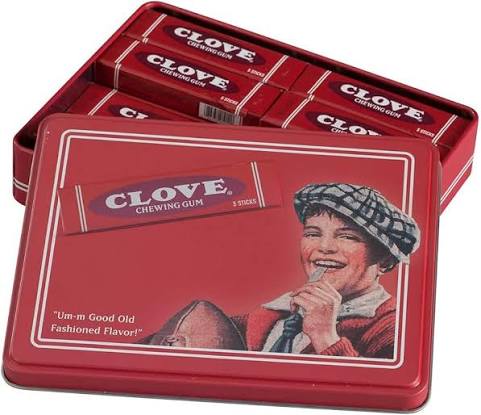
7 Owners in ~110 years
Here’s where things get complicated, and also a little funny.
Clove started at Adams Sons & Co., which merged into the American Chicle Company (founded in part by Edward Beemans of Beemans gum fame; the vintage gum world is a small one). Warner-Lambert acquired American Chicle in 1962. Pfizer then bought Warner-Lambert in 2000. Pfizer sold its candy brands to Cadbury in 2003, forming Cadbury Adams. Cadbury was absorbed by Mondelez International. Finally, in 2019, Gerrit J. Verburg Co. acquired Clove, Black Jack, and Beemans from Mondelez and gave them a proper home at vintagegums.com. (Gerrit J. Verburg) OK, got all that?
Final count: Adams Sons, American Chicle, Warner-Lambert, Pfizer, Cadbury Adams, Mondelez, Gerrit J. Verburg. Seven owners in 110 years.
The fun part: Clove outlasted every single one of them. The gum is still here. The red wrapper is still red. Meanwhile, Warner-Lambert got eaten by Pfizer, Pfizer sold off its candy division, Cadbury got absorbed by a company most people can’t pronounce, and Mondelez apparently looked at its portfolio one day and decided it didn’t need a 100-year-old clove gum anymore. Gerrit J. Verburg disagreed. Good call.
Our Clove Chewing Gum Review
Important note up front: this is a chewing gum, not a bubble gum. The Bubble Bunch wasn’t trying to blow bubbles with Clove, and nobody did. We rated this one entirely on flavor and texture.
And the flavor split us cleanly in two.
Half the team gave it 5/5 on taste. Not measured endorsements. Actual quotes: “TASTES SOOOOOO GOOD flavor is awesome” and “The best tasting gum I have ever had!” These are people who got hit by clove flavor and immediately understood it. The other half gave it 4/5: one noted the flavor ran out faster than expected, one found the clove intense enough to make their tongue go numb. Both still liked it.
The average taste score landed at 4.5 out of 5, which is excellent by any standard, let alone for a thin-stick chewing gum that’s been around since Woodrow Wilson was president.
About that numbness: it’s real, and it’s not a bug. Clove contains eugenol, the same compound dentists historically used as a local anesthetic before modern medicine. If you chew a lot of this gum and notice your tongue feels a little different, that’s just clove doing what clove has always done. You’re basically chewing the world’s oldest dental supply!
Three out of four testers found the texture just right. One called it too soft.
The biggest knock on Clove is flavor duration. Like Black Jack, this is a thin chicle stick and it doesn’t last as long as a thick modern bubble gum. You get a vivid, specific, genuinely distinctive first few minutes, and then it fades. That’s not a defect. It’s just what this gum is. Come in knowing that and deal with it.
If you want the most interesting flavor in the chewing gum world, backed by 110 years of history and a Prohibition-era alibi with a dental ingredient that makes your tougue feel funny, this is your gum. Check our history of bubble gum to see where Clove fits in the bigger story, and our best bubble gum rankings to see where it lands in the full lineup. And check out our history page for a full rundown on the history of gums and bubble gums.
Visitor Reviews
Reader ratings and comments are coming in a later phase. Soon you'll be able to score this gum yourself and tell us what you think.
In a Nutshell
What we like 👍
What we don't like 👎
Clove Gum has been around since 1914, which makes it older than sliced bread. During Prohibition, people chewed it to mask the smell of alcohol on their breath. In the 1940s it went into field kits for soldiers at the front. It is, to put it plainly, a gum with a resume. The Bubble Bunch was split: two testers called it the best gum they'd ever had, while another noted the clove flavor was so strong it made their tongue go numb. One important caveat: this is a chewing gum, not a bubble gum. No bubbles here.